
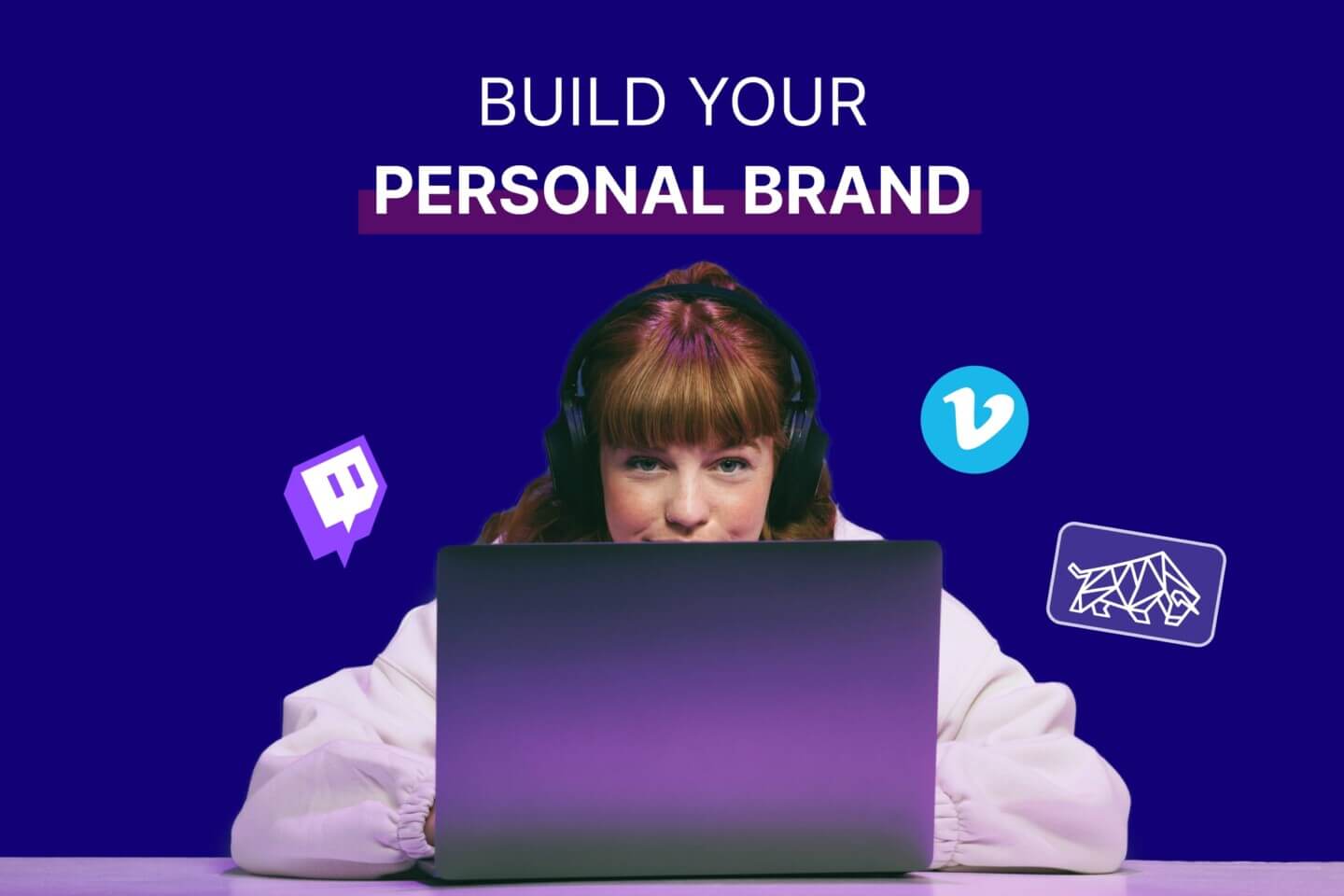
Although personal branding has been around for decades, the Internet and social media has given it a whole new meaning. As our lives have become more visual and fast paced, video content allows us to communicate in a more compelling and engaging way. In this article, we will give 5 tips to content creators who want to create their personal brand through videos.
Understanding personal branding
Personal branding is the process of creating and maintaining a unique image or identity for oneself, showcasing one’s values, skills, and personality to the world. It’s a way to differentiate oneself from others and establish a reputation in a particular field or industry. Personal branding is not just for celebrities or public figures; it’s essential for anyone who wants to build a strong online presence, advance their career, or establish themselves as an expert in their field.
In this digital age, personal branding is more important than ever. With the rise of social media, it’s easier than ever to create and maintain a personal brand. But it’s also easier to get lost in the noise and struggle to stand out. That’s why it’s essential to understand personal branding and how to create a strong personal brand.
The benefits of a strong personal brand
A strong personal brand can have numerous benefits, both personally and professionally. Here are some of the most significant advantages of having a strong personal brand:
- Boosted confidence: Establishing a strong personal brand enhances self-assurance and helps you feel more comfortable in your own abilities.
- Expanded networking opportunities: It makes it easier to connect with like-minded professionals and build valuable relationships.
- Enhanced online presence: A recognisable personal brand increases visibility and strengthens your digital footprint within your industry.
- Greater credibility: Positioning yourself as an expert in your field builds trust and authority with your audience.
- Improved career prospects: A strong personal brand can lead to career growth and open doors to new opportunities.
Tip 1: Create your personal brand
A personal brand is a unique combination of characteristics, values, skills, experiences, and characteristics that define who you are and how you are perceived by others. It is the image and reputation that you consciously or unconsciously create among those around you.
Just like corporate brands, which invest significant effort in shaping perceptions and identities, personal brands also require deliberate effort to cultivate and maintain. Your personal brand reflects your authentic self and can encompass your personal and professional life.
It’s a promise to your audience about what they can expect from you and why they should connect with or follow you.
Identifying your personal brand’s unique selling proposition (USP)
Your unique selling proposition (USP) is what sets you apart from others in your industry or niche. It’s the answer to the question, “What makes you different or better than others who do similar things?” Your USP may be a skill, a unique perspective, a niche specialisation or any characteristic that makes you different.
Finding your USP is key to building your personal brand as it gives you a clear and compelling reason why people should pay attention to you, follow you or engage with your content. Ask your colleagues for feedback to help you better understand and refine your USP so it accurately reflects your strengths and is appealing to employers and peers alike.
Creating a brand persona
Your brand persona is your representation of your brand as a person. It is a well-thought-out creation that fits into the identity of your personal brand. Incorporating elements from your personal life can significantly enhance your brand persona by making it more relatable and authentic. To create a brand personality, you determine the tone of voice and style you will use in your communication. Will it be casual and friendly, authoritative and professional, or somewhere in between?
Consider the visual aspects of your brand, your logo, colour scheme and overall aesthetic. Create a consistent message that conveys your values, beliefs and knowledge. This message should resonate with your target audience and be consistent with your USP. You can also use storytelling techniques to share your experiences, challenges and successes.
Crafting a compelling personal brand statement
A personal brand statement is a concise and compelling statement that summarises your personal brand and communicates your unique value proposition. It’s a way to distill your personal brand down to its essence and communicate it to others. Here are some tips for crafting a compelling personal brand statement:
- Keep it concise: Your personal brand statement should be short and to the point. Aim for a statement that is no more than 2-3 sentences.
- Make it unique: Your personal brand statement should reflect your unique personality, values, and skills. Avoid using generic language or clichés.
- Focus on benefits: Instead of listing your skills or qualifications, focus on the benefits that you can offer to others. What problems can you solve? What value can you provide?
- Use action verbs: Use action verbs like “help,” “create,” “inspire,” or “educate” to describe what you do.
Tip 2: Video content strategy in building a personal brand
Video content has become very important in the process of building a personal brand due to its engaging and accessible nature. Developing a personal branding strategy is crucial to effectively use video content, as it helps communicate your identity and connect with the right audience. To use video effectively, you need to understand how it can enhance your personal brand.
Think about visual communication. Video allows you to convey messages through body language, facial expressions and visuals, creating a truly engaging form of communication. Present substantive and specialist knowledge. Using a video, you can present your knowledge and experience, establishing yourself as a credible authority in your field.
Identification of the target group
For your video content strategy to be effective, you need to identify and understand your target audience. Not everyone will connect with your personal brand, so it’s crucial to target the right audience. So, how to do it?
| Market research | Conduct research to determine who your ideal audience is. What are their demographics, interests and preferences? |
| Audience needs | Understand what your audience is looking for and what problems they need solutions to. Your content should match their needs and interests. |
| Segmentation | If your target audience is diverse, consider dividing it into smaller groups with specific needs. This allows for more targeted content. |
Content planning and scheduling
| Calendar | Create an editorial calendar with topics, formats and release dates for your videos. This helps keep things organized and consistent. |
| Content variety | Plan a variety of content types, including educational videos, storytelling, tutorials, and behind-the-scenes content. Diversity keeps audiences engaged. |
| Frequency | Specify how often you will post videos. Consistency is key, so set a schedule you can realistically stick to. |
| Platform selection | Choose platforms that match your target audience’s preferences. Different platforms have different best practices, so plan your content accordingly. |
Establishing an online presence
Establishing an online presence is a crucial part of building a strong personal brand. Here are some tips for establishing an online presence:
- Choose the right social media platforms: Not all social media platforms are created equal. Choose the platforms that are most relevant to your industry and target audience.
- Create a consistent brand voice: Use a consistent tone and language across all of your social media platforms. This will help you establish a strong brand voice and build trust with your audience.
- Use high-quality visuals: Use high-quality visuals like photos and videos to showcase your personality and style.
- Engage with your audience: Engage with your audience by responding to comments and messages, and by creating content that encourages conversation and interaction.
Tip 3: High-quality video content production
High-quality video content requires the right tools and equipment. Using various social media tools can boost your video content online presence. Consider investing in a good high definition camera, lenses that fit your style, lighting equipment for a professional look, external microphones or audio recorders for clear audio, tripods for stabilisation and editing software for post production.
The role of visual and audio elements in building a personal brand
Visual and audio elements play a big role in video content. To engage your audience pay attention to visual composition, framing, angles and composition. Use text overlays and captions to reinforce your brand’s key points and visual identity. Background music and sound effects can set the mood and highlight key moments, while colour grading can keep colours consistent and attractive throughout your video.
Tip 4: Distribution and promotion of your video content
To reach your target audience, it is essential to choose the right video content sharing platforms. When making your choice, consider the following factors:
Public relations play a significant role in managing and enhancing personal brands, particularly for celebrities and politicians. Effective public relations strategies can help maximise exposure and profitability in both online and offline spheres.
Audience demographics: Analyse your target audience’s demographics to determine which platforms they visit most frequently.
Content type: Different platforms may be more suitable for certain types of content. For example, YouTube is ideal for tutorials and in-depth content, while Instagram and TikTok are better for shorter, visually engaging videos.
Goals and objectives: Align your platform selection with your personal branding goals. Some platforms are better suited to building a community, while others focus more on brand exposure.
SEO and video optimisation
Search engine optimisation (SEO) for video is essential to ensure that your content can be discovered by your target audience. Consider:
Keyword research: Identify relevant keywords and phrases related to your content and personal brand. Use tools like Google Keyword Planner or Ahrefs to find relevant keywords.
Optimised video titles and descriptions: Create descriptive and keyword-rich titles and descriptions for your videos. This helps search engines and viewers understand your content.
Tags and metadata: Use appropriate tags and metadata to categorise your videos and improve their searchability.
Social media and video promotion strategies
Using social media is an effective way to promote video content and expand the reach of your personal brand. For social media influencers, personal branding is crucial in promoting their video content, as it enhances confidence and creates new opportunities. What should you pay attention to?
| Engagement and interactivity | Increase audience engagement with polls, questions and discussions about your video content. |
| Collaborate with influencers | Collaborate with influential or like-minded people in your niche to reach a wider audience. |
| Posting schedule | Develop a consistent posting schedule on social media to keep your audience engaged and informed about your video releases. |
| Paid promotion | Consider using paid advertising on social media platforms to reach a wider audience and gain exposure. |
Tip 5: Use OTT platforms to build your personal brand
OTT, or Over-the-Top, platforms refer to streaming services that deliver content directly to viewers over the Internet, bypassing traditional cable or satellite providers. Understanding the dynamics of OTT platforms is crucial to effectively use them to build your personal brand. This understanding includes the nature of OTT content, viewing trends, the diverse range of platforms available, and the many benefits they offer, including:
Content management and delivery in one place: OTT platforms provide a centralised location for content management and delivery. This streamlines the distribution process and gives viewers easy access to your videos from one convenient place.
Tailoring the viewing experience for niche audiences: OTT platforms enable content creators to tailor content and viewing experiences to specific niche audiences. This alignment ensures that you’re delivering content that resonates with your target audience, making your personal brand more recognisable.
Giving users more control over their brand, content, audience and data: OTT platforms give users more control over their personal brand. You can define the style, format and tone of your content, select your audience, and take greater control over the data and analytics associated with your content.
Avoiding censorship: One of the significant advantages of OTT platforms is that users often have more control over their content, allowing them to avoid censorship and content restrictions sometimes imposed on popular sites like YouTube.
Private-label OTT platforms are comprehensive solutions that enable content creators to customise, brand, and distribute content on their terms. These platforms offer several benefits, including content control, branding, monetisation, and the ability to reach a global audience without requiring a large production budget. You can read about more advantages of your own OTT platform in our previous article.
Conclusion
Content creators should pay attention to several things to effectively build their personal brand, as well as distribute and promote their unique content.
By taking advantage of the benefits of OTT platforms, content creators can create authentic, engaging content, manage their brand, and connect with audiences on their terms.
If you’re looking for comprehensive solutions to take full advantage of OTT platforms, remember that at Spyrosoft BSG we offer fully customisable white-label OTT platforms. Our experts can provide you with the tools and knowledge to build a professional image using video. Don’t delay and contact us today!
If you find this article valuable, you can share it on social media →
Read more about the VOD & OTT Industry!

Media technology integration: turning stacks into systems
Learn how POIS and ESAM move ad control to the source, giving broadcasters real-time flexibility and regional targeting.
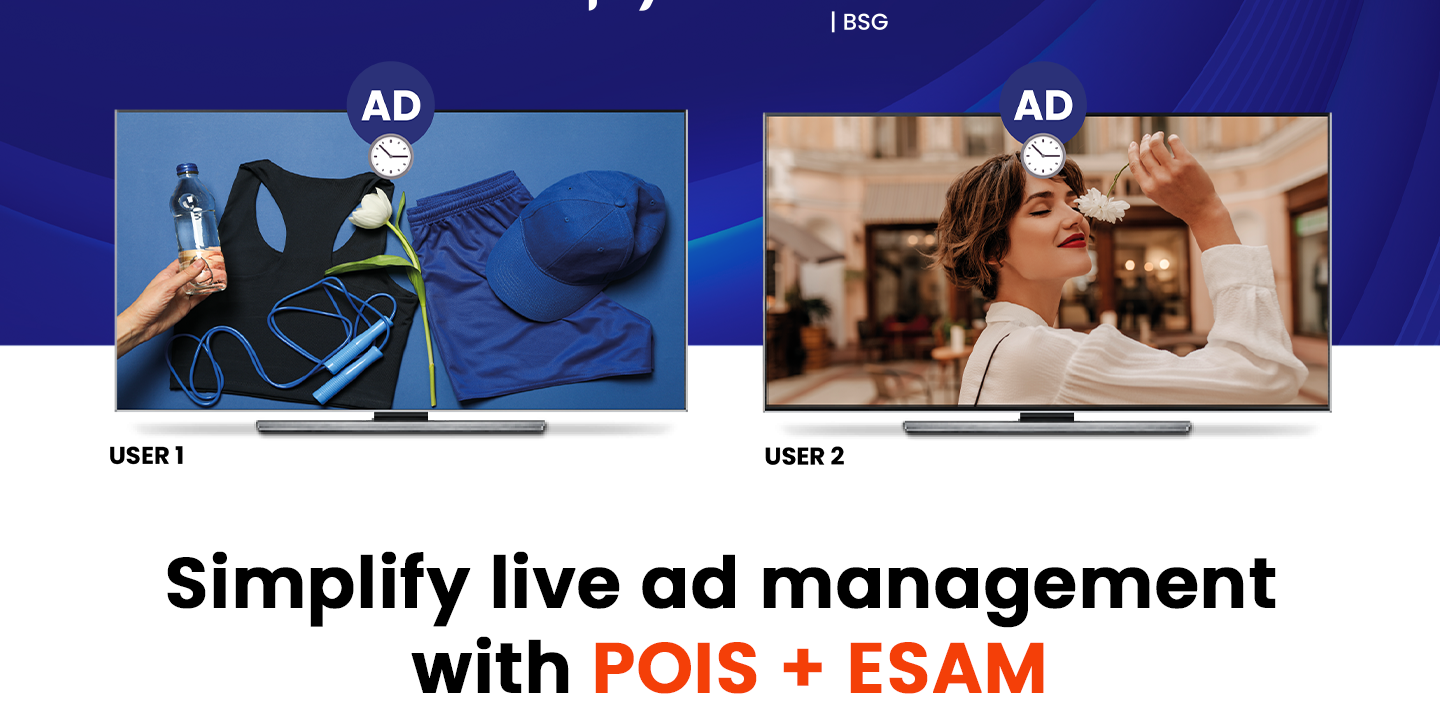
How POIS and ESAM power live ad control
Learn how POIS and ESAM move ad control to the source, giving broadcasters real-time flexibility and regional targeting.
What is Amazon Vega OS and why it matters for Fire TV users
Amazon unveils Vega OS, a new Linux-based system replacing Android on Fire TV. Faster, lighter, and built for independence from Google’s ecosystem.
Are you looking for a partner to build a Video Solution?
Leave your email and a short description about your project. We would gladly discuss different cooperation possibilities!